As an Amazon Associate, we earn from qualifying purchases. Some links on this site are affiliate links at no extra cost to you. Our recommendations are based on thorough research and editorial judgment.

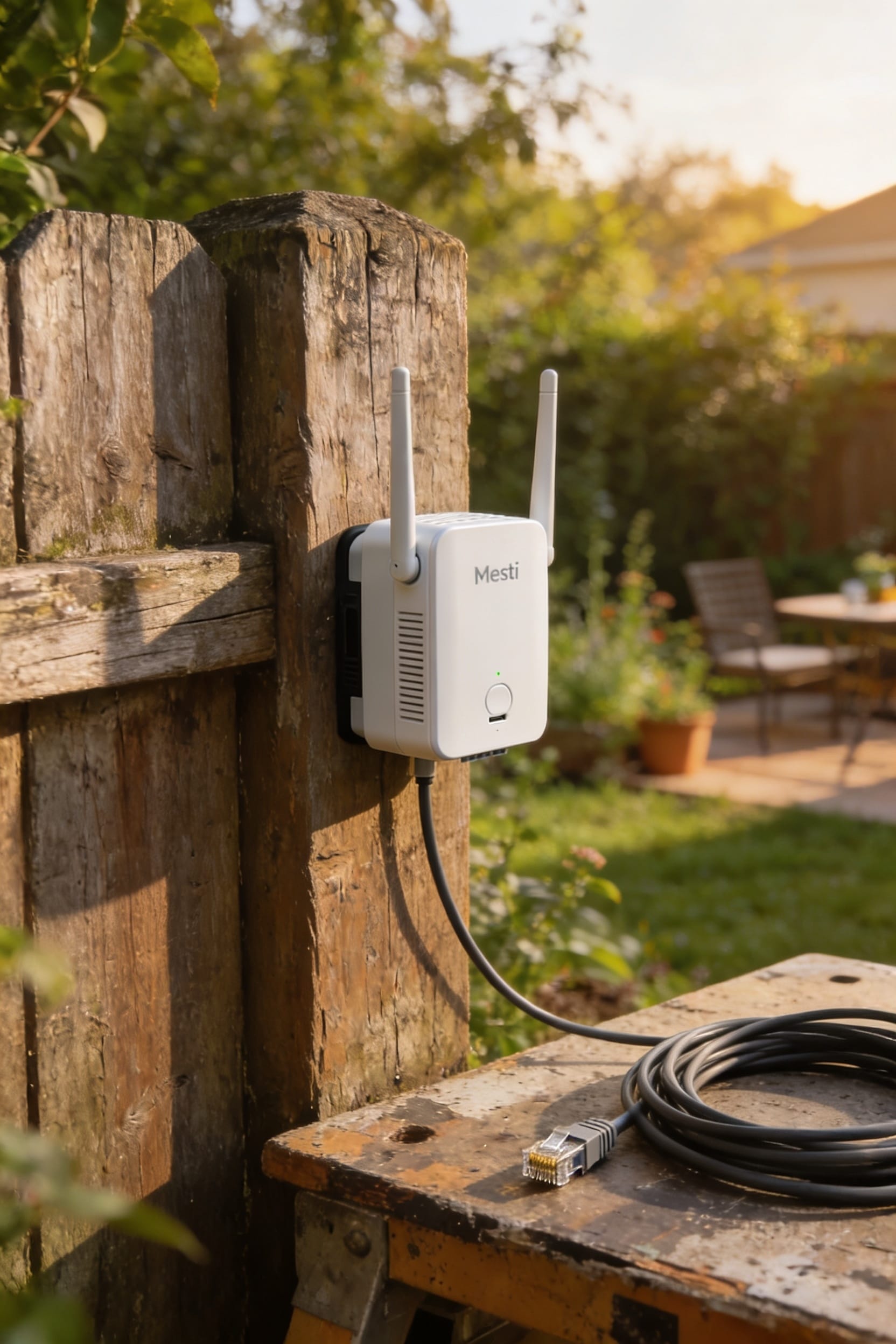
How to Extend WiFi to Your Backyard: Best Solutions

All right, here’s what I’ve learned: your backyard WiFi solution depends entirely on distance and obstacles between your router and dead zone. For nearby coverage under a few hundred feet, an outdoor access point with clear line of sight works great. Farther out? Buried Ethernet cable to a remote access point beats wireless every time. Mesh systems handle middle ground nicely. Before you buy anything, measure your distance and check what’s blocking the signal—that one step changes everything about which solution actually works.
Key Takeaways
- Measure distance and identify obstacles between router and backyard to select the most appropriate coverage solution.
- Bury Ethernet cable for rock-solid, long-distance coverage beyond 100 meters with superior reliability and minimal latency.
- Install outdoor access points with IP65+ enclosures and PoE capability for reliable coverage within a few hundred feet.
- Deploy mesh systems or AC1200 repeaters positioned halfway between router and dead zones for flexible coverage expansion.
- Test signal strength before and after setup using a signal-testing app to validate performance improvements.
Map Your Backyard Distance to the Right Solution
Before you buy anything, you need to know how far your WiFi actually has to travel. Grab a measuring tape or use your phone’s map app—seriously, I’ve wasted money on gear that didn’t fit my actual distance. Check your property zoning too, since some areas have restrictions on tower heights or outdoor equipment placement. Next, look at topography mapping of your yard. Hills, trees, and terrain between your router and target area (like that barn or back patio) matter more than you’d think. Ground elevation changes block signals harder than you’d expect. Once you know your exact distance and what’s in between, you’ll match it to the right solution instead of guessing.
Wired vs. Wireless: When Cable Beats Convenience
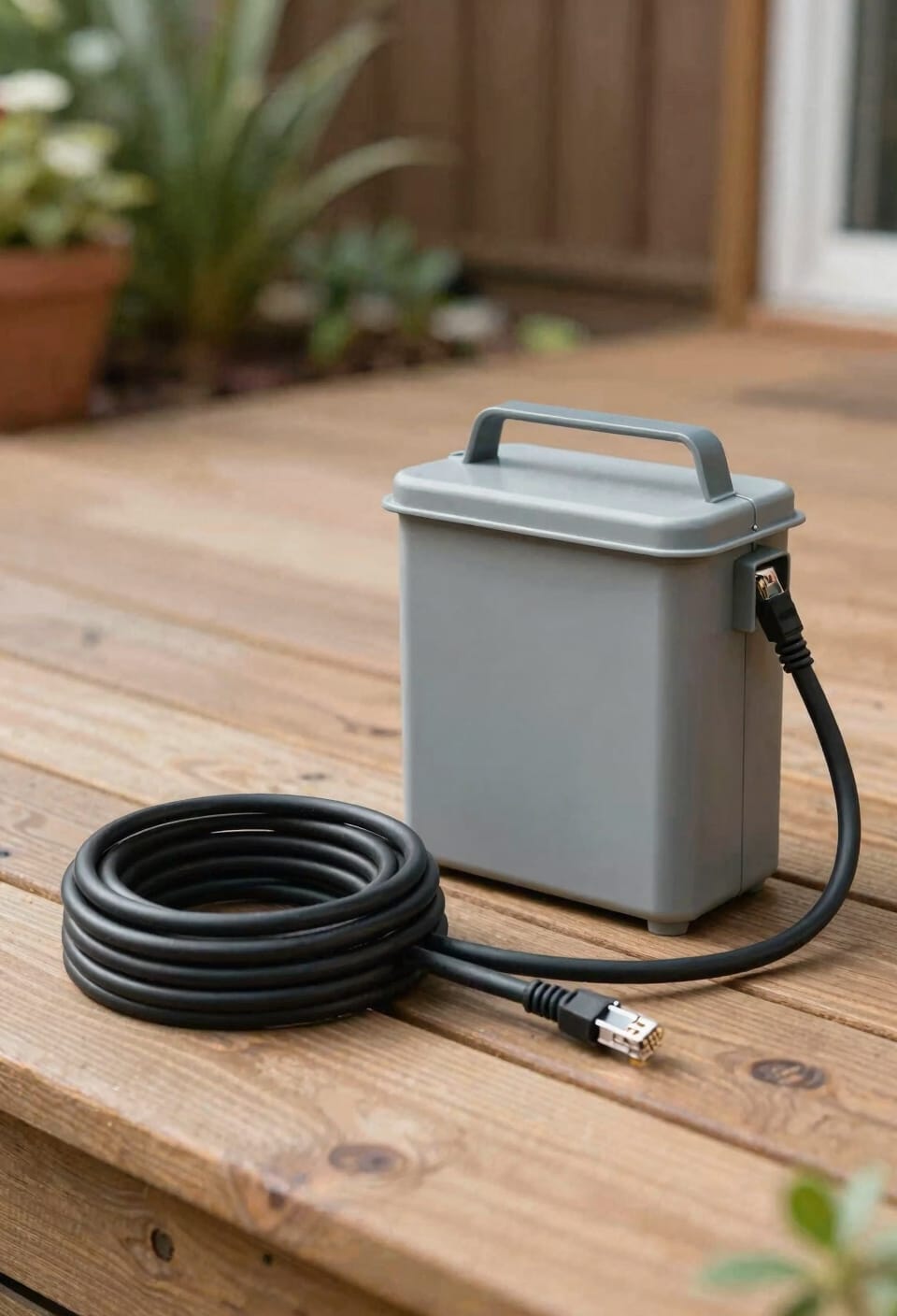
Once you’ve mapped your distance and terrain, you’ll face the real choice: pull a cable or go wireless. Here’s the thing: wired solutions beat wireless every time for reliability. Running Ethernet cable—that’s the physical data line that connects your devices to your router—eliminates signal latency, which is the delay between sending and receiving data. Your streaming won’t stutter. Your games won’t lag.
Now, installation cost matters. Burying cable across your yard costs more upfront than slapping up an access point. But for permanent setups, especially anything beyond 100 meters, that wired investment pays dividends. You’re not fighting signal degradation or dealing with repeater headaches. You get rock-solid performance that wireless simply can’t match. Sometimes convenience isn’t worth the trade-off.
Outdoor Access Points: Best Performance for Nearby Coverage
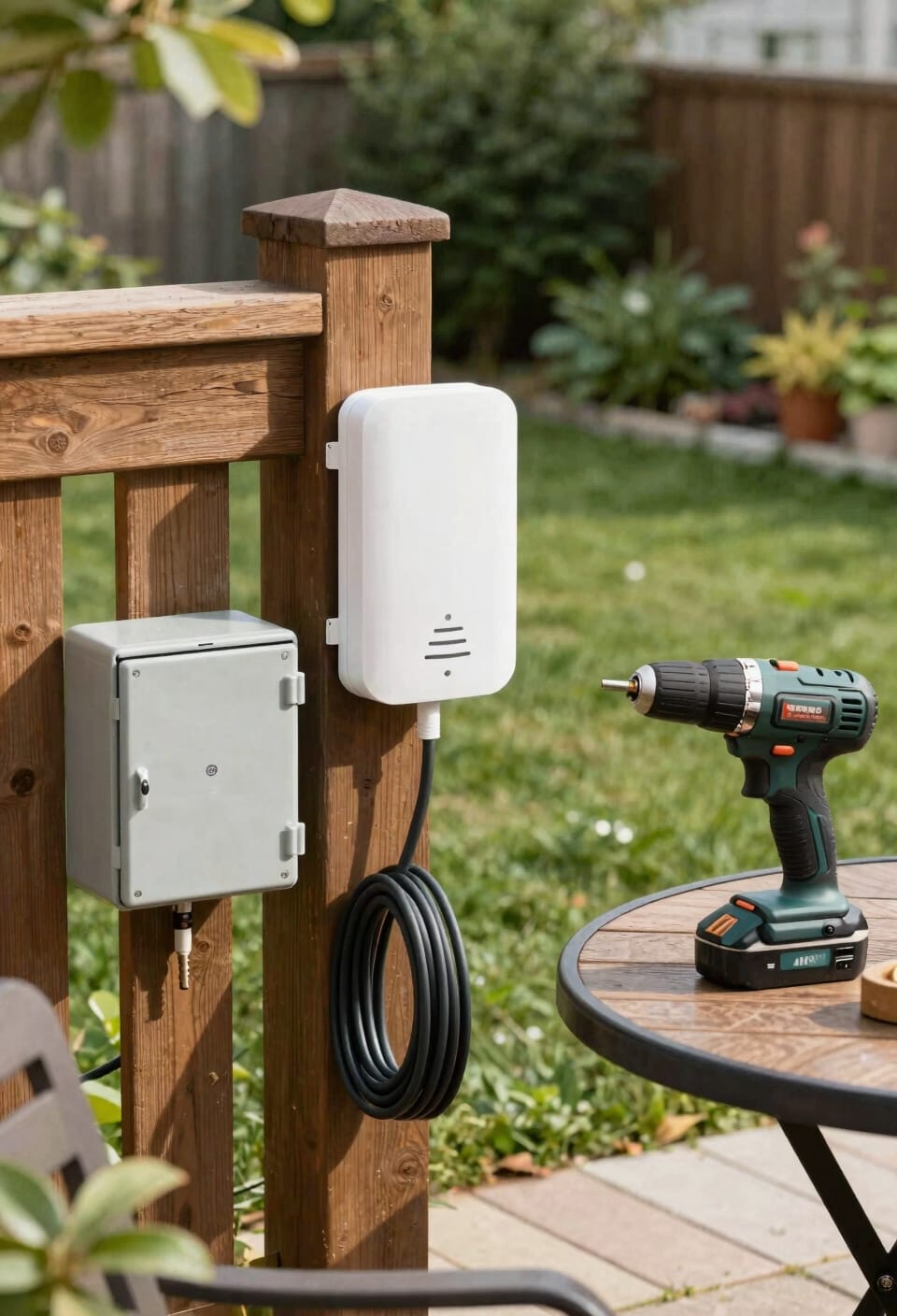
If you’ve got the budget and the distance isn’t too brutal—say, under a few hundred feet—an outdoor access point will blow away anything else you throw at it. I’m talking about a dedicated device designed to live outside, not some router shoved in a weatherproof box and called a day.
Look for models with IP65+ enclosures (basically they laugh at rain) and 5GHz optimization for serious speed. PoE capability means you run one cable instead of wrestling with outdoor power outlets. Mount it on your house with a clear line of sight to your barn or patio, and you’ll get reliable coverage without the performance hit you’d take from a repeater. Worth every penny if distance allows.
Repeaters and Mesh: Extending Farther Without Cable
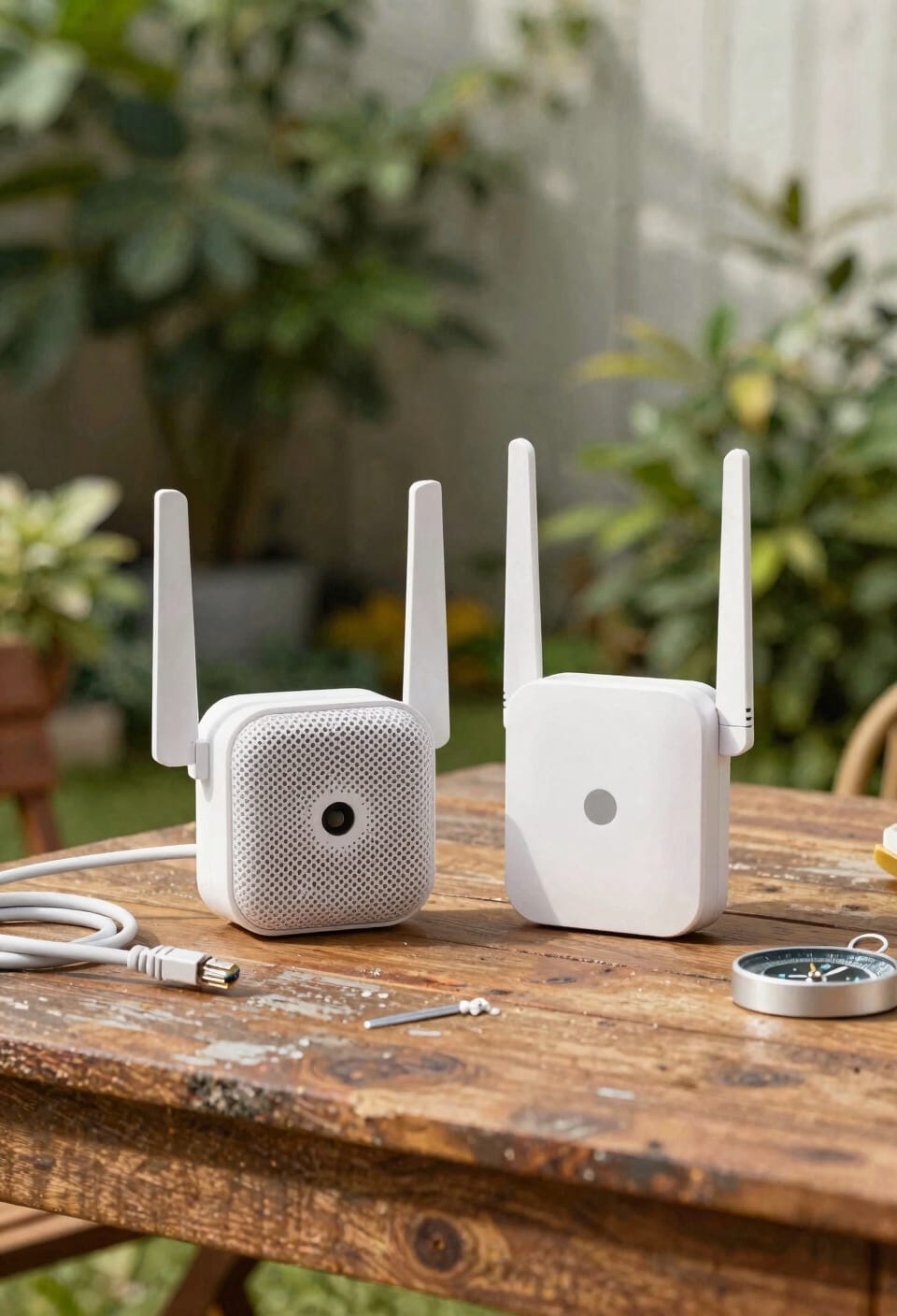
When an outdoor access point won’t cut it—maybe the distance is too far, or running a cable feels like overkill—repeaters and mesh systems can bridge the gap without you having to bury Ethernet across half your yard. I’ve seen AC1200 repeaters work surprisingly well for barns several hundred feet away. Mesh systems scale better though. You mount one unit in your backyard, and it basically doubles your WiFi reach across maybe 70 acres. The smart part? Repeater placement matters hugely. Position it halfway between your router and dead zone, and you’ll notice the difference immediately. Mesh scaling handles multiple devices better too, which matters if you’re streaming or gaming out there. No cables required.
Running Ethernet for Rock-Solid Long-Distance Coverage
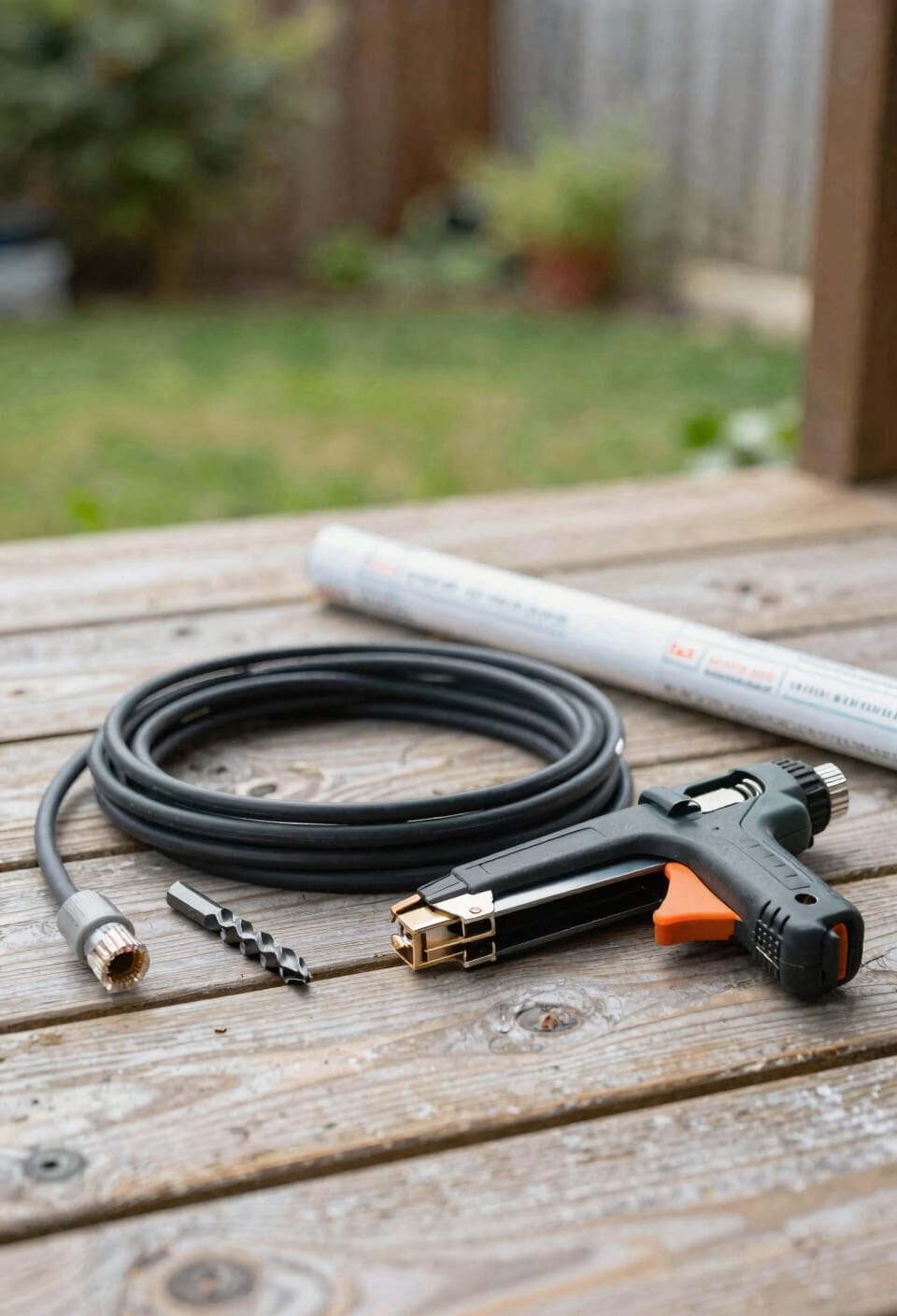
Bury a cable across your yard and you’ve basically solved WiFi at distance—not the sexiest solution, I know, but it’s genuinely the most reliable one I’ve found. Here’s the thing: copper Ethernet works flawlessly up to 100 meters, so if your barn or backyard structure sits within that range, running physical cable beats wireless every time. I recommend using buried conduit to protect the line from damage and weather. Once you’ve got Ethernet reaching your remote building, reconnect it to an access point inside, and suddenly you’ve got rock-solid coverage where repeaters would’ve failed. Add surge protection at both ends to guard against lightning strikes. Yeah, it’s labor-intensive upfront, but you’re buying years of trouble-free performance.
Benchmark Your Signal Before and After Setup
You’ll want to test your WiFi signal strength before you install that outdoor access point or run Ethernet to your barn—seriously, don’t skip this step. I grab my phone and walk around my property with a signal-testing app, noting where coverage drops off. Signal logging—basically recording those measurements at different spots—shows me exactly what I’m working with right now.
Then I ask myself honest questions through user surveys, or just by actually using the WiFi where it matters. Can I stream video by the pool? Does my phone disconnect near the fence? These real-world tests beat any spec sheet.
After setup, I retrace my steps and compare. You’ll be shocked how much better things get. That data proves whether your investment actually works.
Frequently Asked Questions
What Weather Conditions Can Outdoor Wifi Equipment Withstand Year-Round?
I’d recommend equipment with IP67 rated enclosures that withstand moisture and temperature extremes year-round. You’ll want UV resistance to handle sun exposure and corrosion protection against rain, snow, and humidity for reliable outdoor performance.
How Do I Mount Equipment Safely on My House Exterior?
I’d use a sturdy ladder with stabilizer bars for safety, then slide the bracket into grooves and secure with screws. I’d run Ethernet through the groove, apply weatherproof sealant around connections, and tighten everything with proper tools.
Can Outdoor Access Points Work Through Trees and Obstacles?
I’d say like a telegraph operator, outdoor access points struggle through trees and obstacles. You’ll experience signal loss without direct line of sight. I’d recommend positioning your AP where interference is minimal for peak performance.
What’s the Difference Between Residential and Enterprise-Grade Access Points?
Enterprise-grade APs I’d recommend handle higher client density and offer managed configurations with advanced licensing features, whereas I find residential routers are limited to under 1,000 square feet with unmanaged, basic capabilities.
How Much Does It Cost to Bury Ethernet Cable Permanently?
I know you’re worried about hidden costs, but burying Ethernet’s cheaper than you’d think. You’re looking at $300–$1,500 depending on burial depth, soil type, conduit cost, and local permit requirements for your yard’s distance.
Conclusion
All right, you’ve got options now, and that’s honestly half the battle. Your backyard WiFi situation doesn’t have to be like trying to hear a whisper across a football field anymore. Pick the solution that matches your distance and budget, test your signal before and after, then enjoy streaming on your patio. You’ve totally got this.