As an Amazon Associate, we earn from qualifying purchases. Some links on this site are affiliate links at no extra cost to you. Our recommendations are based on thorough research and editorial judgment.

5G Home Internet vs Cable: Which Is the Better Choice?

Look, there’s no universal winner here—it depends on where you live and what you’re doing. If you’ve got solid 5G coverage and light streaming habits, you’ll love the simple setup and fixed $50–$75 monthly bill. But if you’re in a city juggling multiple 4K streams and gaming sessions simultaneously, cable’s consistency wins despite the higher cost and professional installation hassle. Check your local 5G availability first; that’s your actual dealbreaker. The specifics of your situation matter way more than the hype.
Key Takeaways
- 5G Home Internet offers easier self-installation and lower fixed costs ($50–$75/month); cable requires professional setup but delivers more consistent speeds.
- Cable provides superior reliability for heavy users with multiple simultaneous 4K streams and gaming; 5G suits light streamers and renters.
- 5G availability is limited to cities and metro areas; cable infrastructure is more widespread across urban, suburban, and some rural regions.
- Cable maintains stable latency ideal for gaming and video calls; 5G experiences variable latency due to signal fluctuations and congestion.
- Cable speeds average 100–2,000 Mbps with predictable performance; 5G ranges 70–300 Mbps realistically but fluctuates with network conditions and weather.
Is 5G Home Internet Available Where You Live?
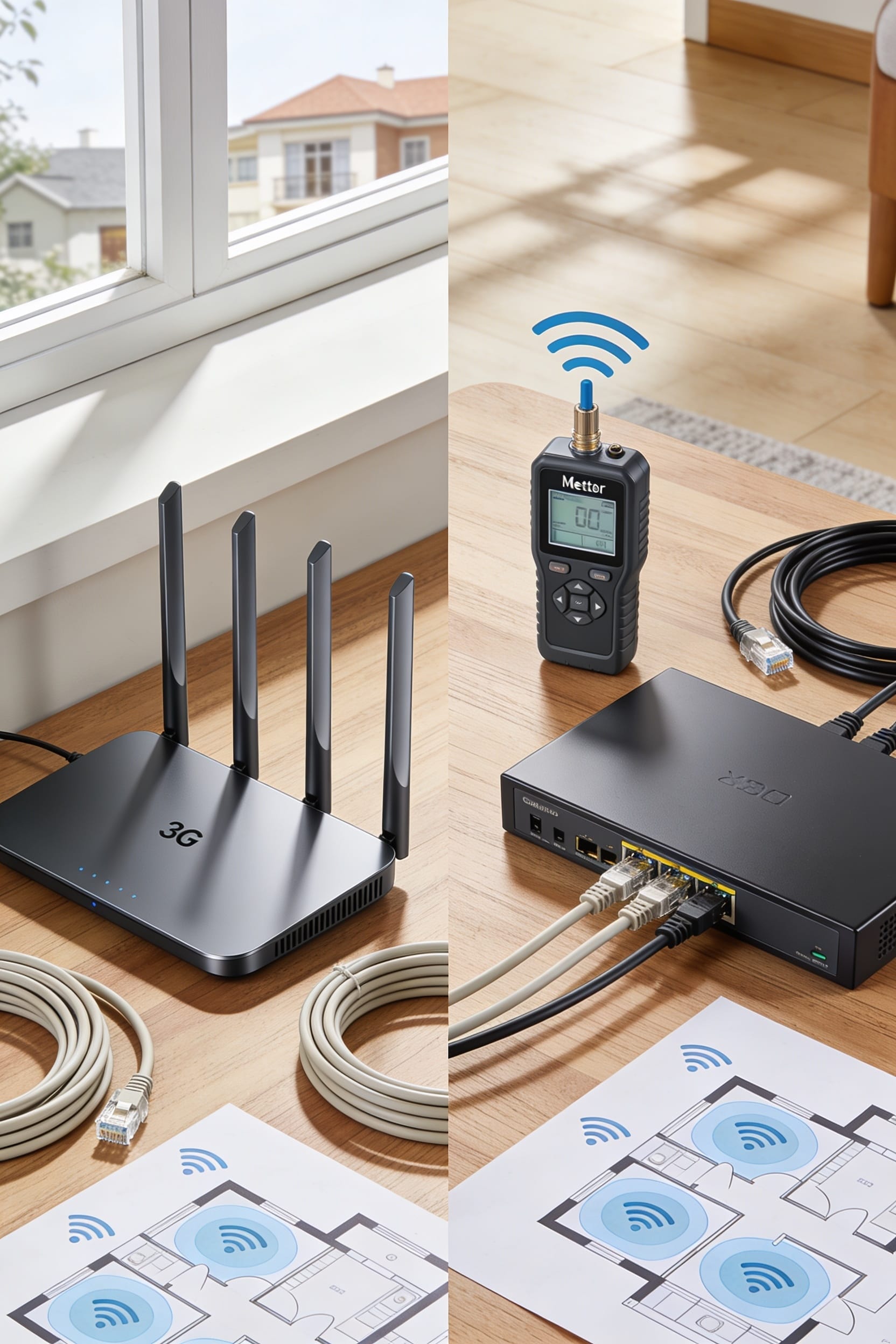
whether 5G Home Internet is actually available to you comes down to one factor—proximity to your carrier’s 5G cell towers. You’ll want to check your local coverage by visiting your carrier’s website and entering your address into their signal maps. These maps show you exactly where 5G reaches and where it doesn’t. The honest truth? 5G Home Internet is still mostly limited to cities and metro areas. If you’re in a rural or suburban pocket, you might be out of luck right now. But the network’s expanding constantly. Even if it’s not available today, it could be next year. The best move is to check those signal maps yourself rather than guessing. Your actual coverage could surprise you—either way.
Cable vs. 5G: Speed, Upload, and Real-World Performance
Now that you know whether 5G Home Internet actually reaches your place, let’s talk about what you’re actually getting when you flip the switch—because knowing coverage exists and knowing the speeds you’ll see are two pretty different things.
Cable typically delivers 100-2,000 Mbps downloads, while 5G Home Internet ranges 40-1,000 Mbps, though you’ll realistically see 70-300 Mbps. For uploads, cable wins with 5-100 Mbps versus 5G’s variable 5-50 Mbps. Here’s the real difference: cable stays consistent. 5G fluctuates based on congestion and signal strength. When you’re latency testing for gaming or video calls, cable’s low, steady performance beats 5G’s susceptibility to network hiccups. Peak throttling can hit either service, but cable’s infrastructure handles it more gracefully.
Reliability and Consistency: Which Handles Your Household?
Speed and price matter, but they don’t mean much if your internet vanishes the moment your kid starts a video call while you’re streaming. Here’s the thing: cable gives you network stability you can count on. It’s wired, so weather and congestion hit it less hard. Your latency—that’s the delay between sending a command and getting a response—stays low and predictable, which matters for gaming or video calls.
5G Home Internet? It’s fast when it’s fast, but latency variation can sneak up on you. Network congestion and signal fluctuations create hiccups. Cable also handles multiple devices without breaking a sweat. If your household is the type that does everything simultaneously, cable’s your safer bet. 5G works fine for lighter use, though.
Setup and Installation: DIY or Professional?
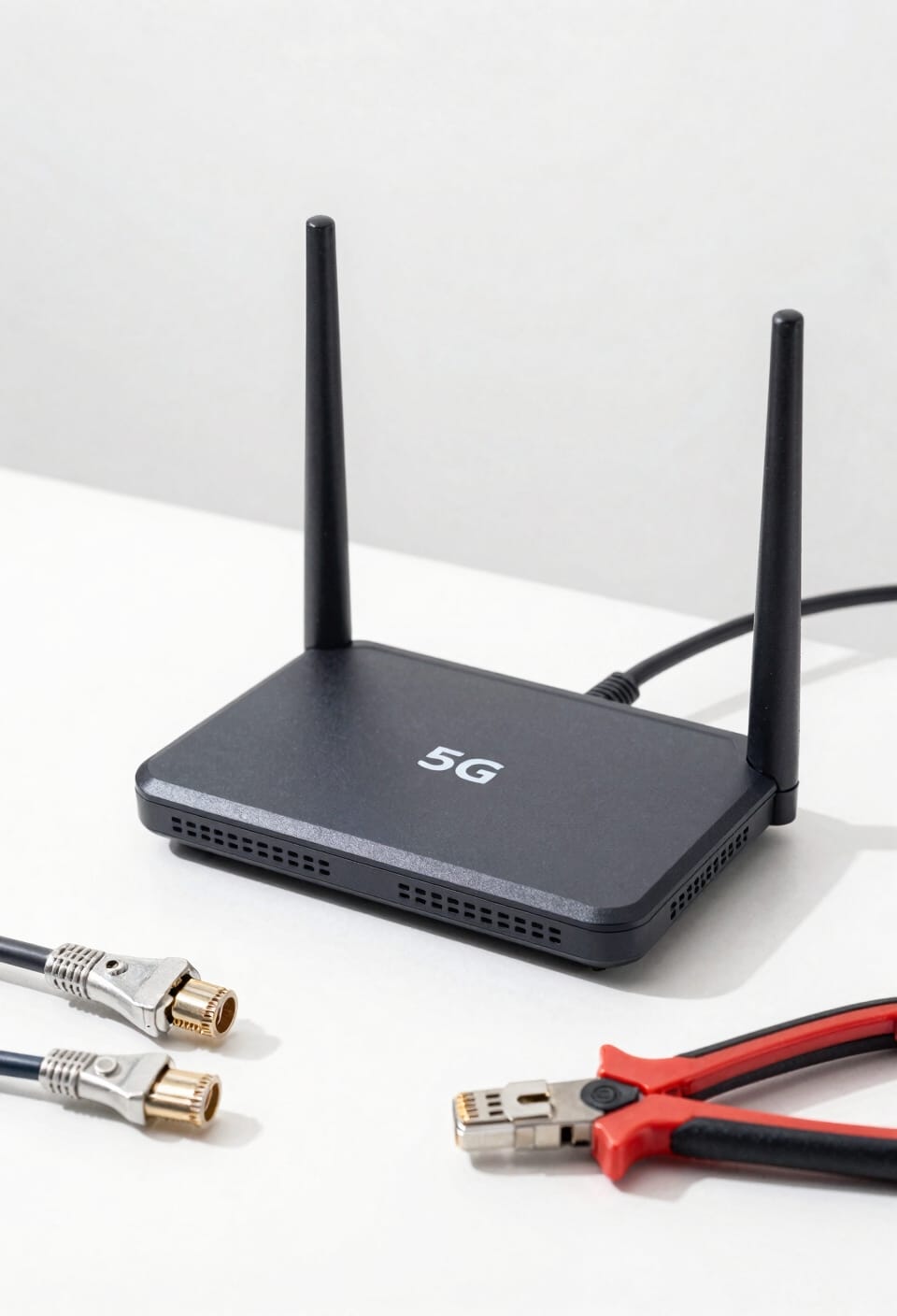
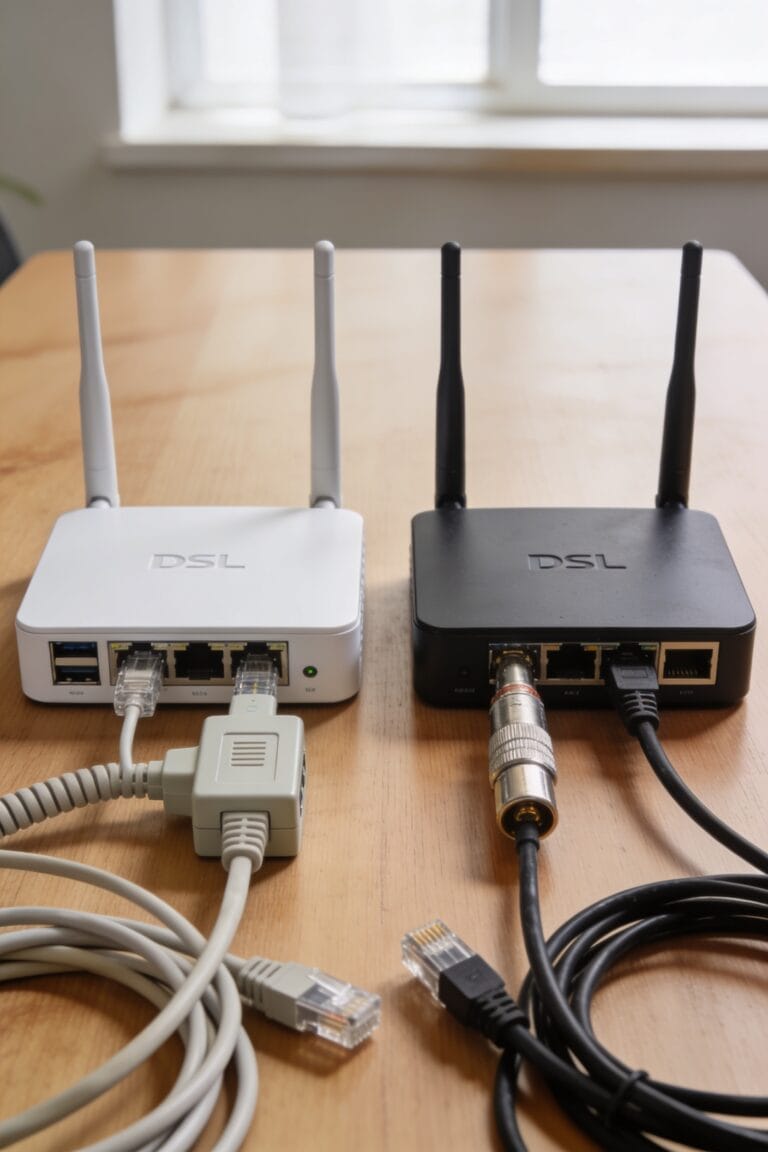
Once you’ve got reliability sorted, the next hurdle is actually getting the thing installed—and this is where cable and 5G Home Internet split pretty dramatically. Cable demands a professional appointment logistics situation: a technician visits your home, runs coaxial cables (the thick wires that carry your internet signal) through walls, and sets everything up. It’s invasive but thorough.
5G? Self installation tips make it almost embarrassingly simple. You unbox the gateway device, plug it in, and you’re done. Seriously. No drilling, no scheduling around someone else’s availability, no waiting three weeks for an opening.
If you’re a renter or hate disruption, 5G wins here hands down.
Monthly Cost: What You’ll Actually Pay
The money part’s where things get genuinely interesting, because cable and 5G Home Internet operate on totally different pricing philosophies. You’re looking at cable running $19.99 to $105 monthly, but here’s where I need to be straight with you: hidden fees pile up fast. Equipment rental, installation charges, regional surcharges—they’re like internet gremlins. 5G keeps it simple at $50-$75 monthly with no hidden fees or annual contracts.
Now, during promotional periods, cable companies dangle aggressive discounts to hook you. That $39.99 rate? Usually jumps to $89.99 after year one. 5G’s pricing typically stays fixed. You won’t find data caps or throttling eating into 5G plans either. Cable often slaps those on. So while cable looks cheaper upfront, 5G’s straightforward pricing often wins when you do the actual math.
Best for Heavy Users, Best for Light Streamers
If you’re running a household where someone’s always gaming, another person’s on a video call, and a third is streaming 4K Netflix simultaneously, cable’s your answer. Heavy users need that rock-solid speed and consistency cable delivers—we’re talking gigabit plans that won’t buckle under pressure. You’ll handle multiple devices without watching everything slow to a crawl.
Now, light streamers? You’re different. If you’re mostly browsing, checking email, and catching YouTube videos one at a time, 5G Home Internet works just fine. You won’t notice the speed difference, and you’ll appreciate the simpler setup and lower monthly bill. The real question isn’t what’s faster—it’s what you actually need. Match your usage to your service, and you’ll stay happy and reasonably wealthy.
Cable or 5G: Which One Wins for You?
How do you actually pick between these two when both could work in your home? Look, it really comes down to your specific situation. If you’re a heavy user with multiple devices streaming simultaneously, cable’s got the raw power you need—it handles bandwidth-intensive tasks without breaking a sweat. But if you’re in a rental or moving soon, 5G’s self-install gateway means zero installation logistics headaches. Here’s the thing: signal interference can mess with 5G performance in ways cable just won’t experience, especially if you’re surrounded by buildings or trees. Cable’s your rock-solid choice for demanding households. 5G wins if you value flexibility and simplicity over peak performance. Honestly, ask yourself what matters most: reliability or convenience.
Frequently Asked Questions
Can I Use 5G Home Internet While Traveling, or Is It Fixed Location Only?
5G Home Internet’s fixed location only—I can’t take it traveling. You’d need mobile roaming plans or temporary hotspots instead. It’s designed for stationary home use, not portable connectivity.
What Equipment Do I Need to Purchase Separately for Cable Versus 5G Setup?
For cable, I’d need a modem and router—equipment costs vary by provider and setup complexity requires professional installation. With 5G, I get a self-install gateway device, minimizing equipment costs and setup complexity considerably.
How Do Data Caps and Throttling Policies Differ Between Cable and 5G Providers?
I’ve found that cable providers often enforce data caps with usage throttling when you exceed limits, while 5G typically offers unlimited data without data throttling or usage enforcement policies attached.
Can I Switch Between Cable and 5G Providers Without Penalties or Contract Issues?
Switching’s like changing lanes on a highway—5G’s your escape route. You’ll dodge early termination fees with 5G’s no-contract model, while cable often chains you down. Porting numbers stays seamless either way.
Which Option Better Supports Smart Home Devices and Iot Connectivity Simultaneously?
Cable’s superior stability and consistent low latency make it my recommendation for supporting multiple smart home devices and IoT connectivity simultaneously. You’ll avoid congestion issues that plague 5G, especially with mesh networking systems requiring reliable, latency-sensitive connections.
Conclusion
Look, here’s the ironic truth: you’ll probably pick whichever one’s available in your neighborhood, not whichever one’s theoretically better. But if you’ve actually got options? 5G’s fantastic until it isn’t, and cable’s reliable until you’re streaming four things simultaneously. Neither’s perfect, both’ll frustrate you occasionally, and that’s honestly the most honest conclusion I can give you.