As an Amazon Associate, we earn from qualifying purchases. Some links on this site are affiliate links at no extra cost to you. Our recommendations are based on thorough research and editorial judgment.

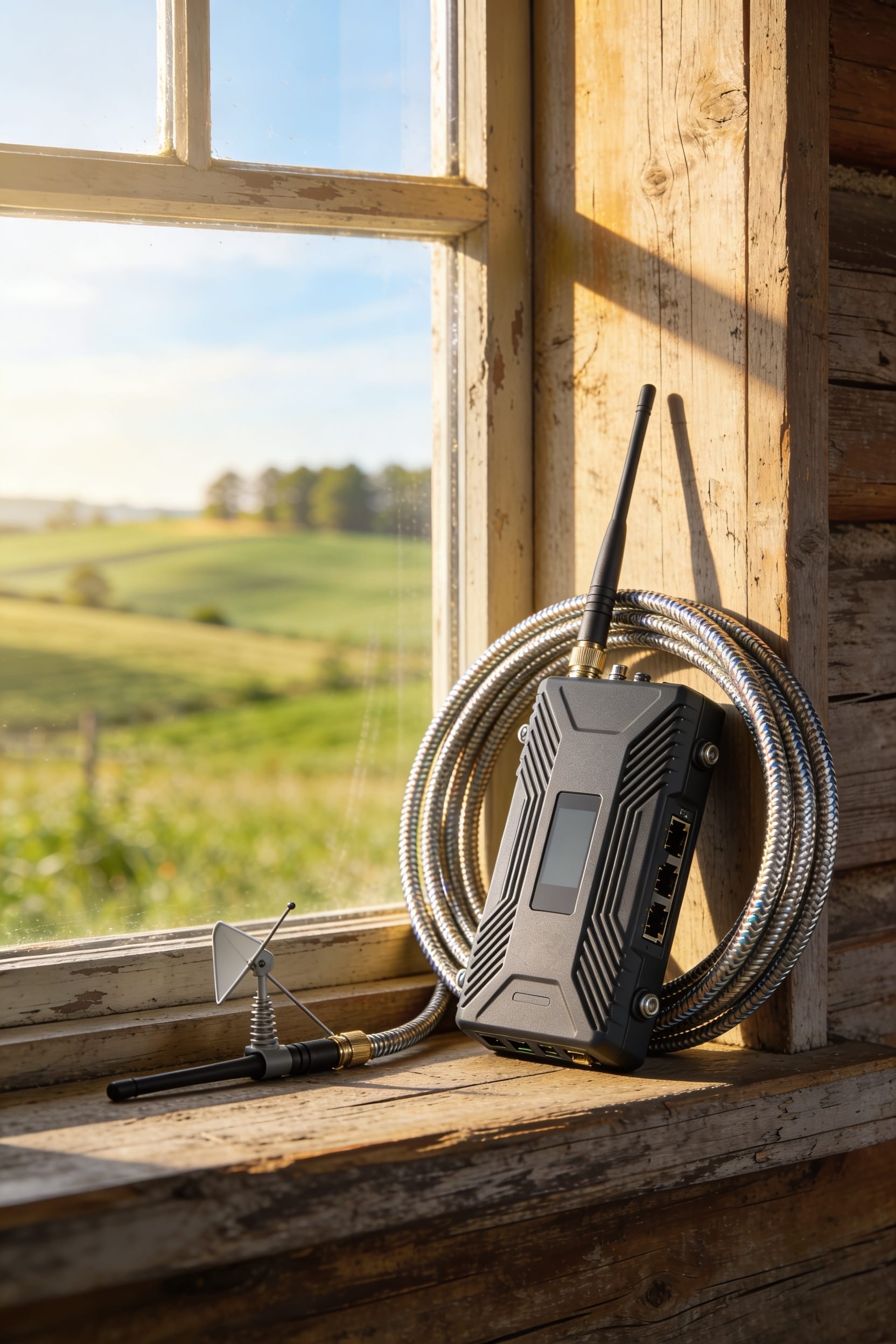
How to Boost Cell Signal in a Rural Area

Look, a cell signal booster can totally work in rural areas, but it needs actual outdoor signal to amplify—you can’t create signal from nothing. Start by measuring your outdoor strength using a signal app (aim for readings above -85 dB), then pick a directional antenna aimed at the nearest tower. Mount everything high, keep your indoor antenna away from the outdoor one, and don’t hide it in a closet. Get these basics right and you’ll see real improvement, though there’s definitely more to know about nailing the specifics.
Key Takeaways
- Use signal mapping apps to find outdoor readings above -85 dB for booster placement effectiveness.
- Mount a directional antenna (Yagi or LPDA) high on your property aimed at the strongest signal.
- Choose a single-carrier booster to concentrate amplification on one network for maximum rural gain.
- Place the booster centrally indoors away from basements, maintaining proper separation from the outdoor antenna.
- Consider satellite internet or emergency hotspots if no usable outdoor signal exists for boosters to amplify.
Can a Cell Booster Work in Your Location?
Now, here’s where carrier compatibility matters. Single-carrier boosters (say, Verizon-only) deliver stronger performance than multi-carrier models because they focus all their power on one network. Check regulatory limits too—boosters can’t exceed FCC power standards, which means they work within specific gain thresholds. Test your outdoor signal first. If you’ve got even a sliver, you’re golden.
How to Measure Your Outdoor Signal Strength
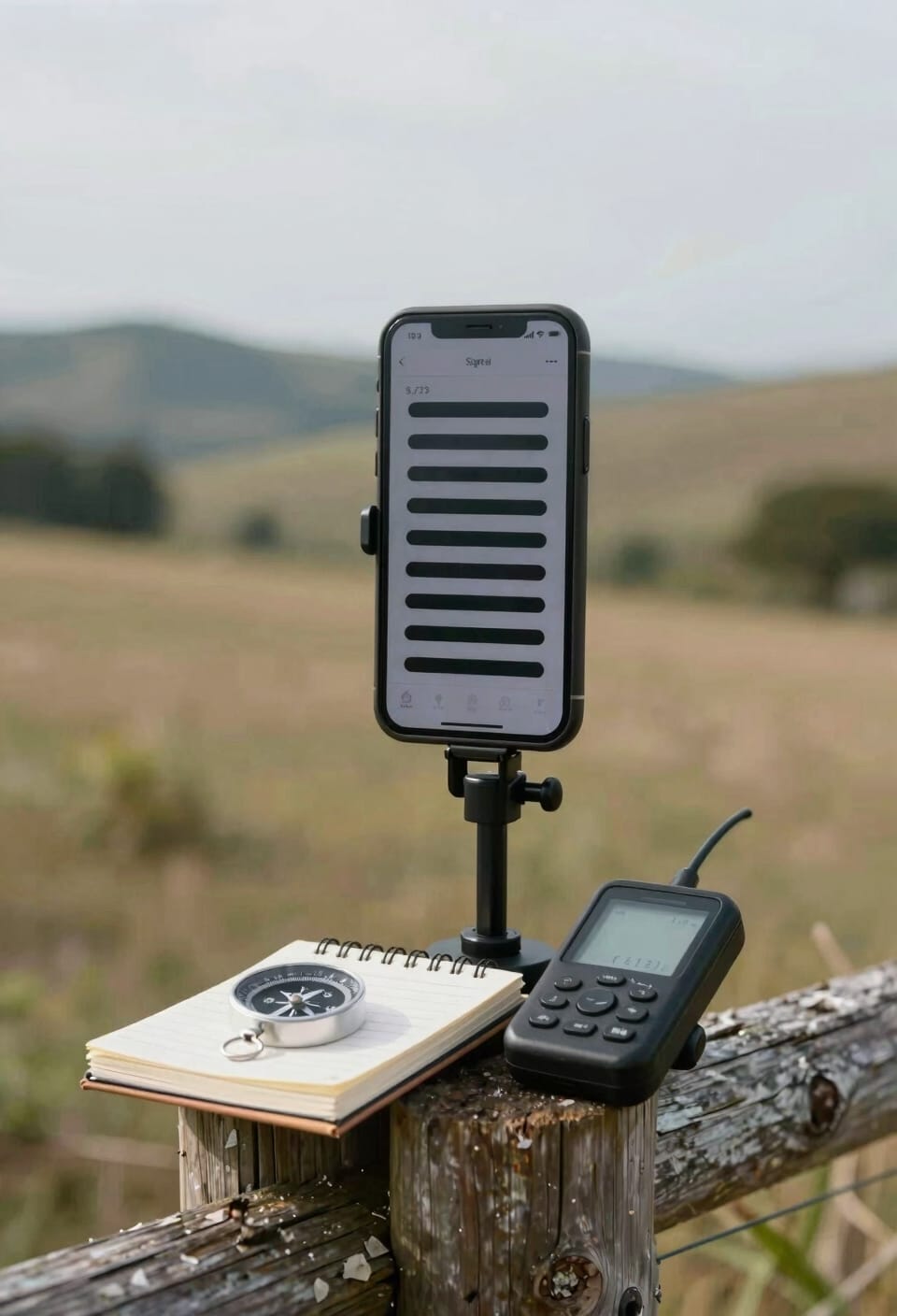
Before you plunk down money on a booster, you’ve got to figure out what you’re actually working with—and that means measuring your outdoor signal strength. I’d grab your phone, walk outside, and check the signal bars in your carrier’s settings. Better yet, use a signal mapping app that shows you exact decibel readings instead of vague bars. You’re looking for anything above -85 dB; below -110 dB means you’re in trouble territory. For the serious stuff, a spectrum analyzer lets you see which frequencies are strongest and where towers are located. It’s basically a detective tool for your signal. Walk around your property, note where it’s strongest outside. That’s where your outdoor antenna goes—high and aimed straight at that tower.
Pick the Right Outdoor Antenna for Your Distance and Terrain
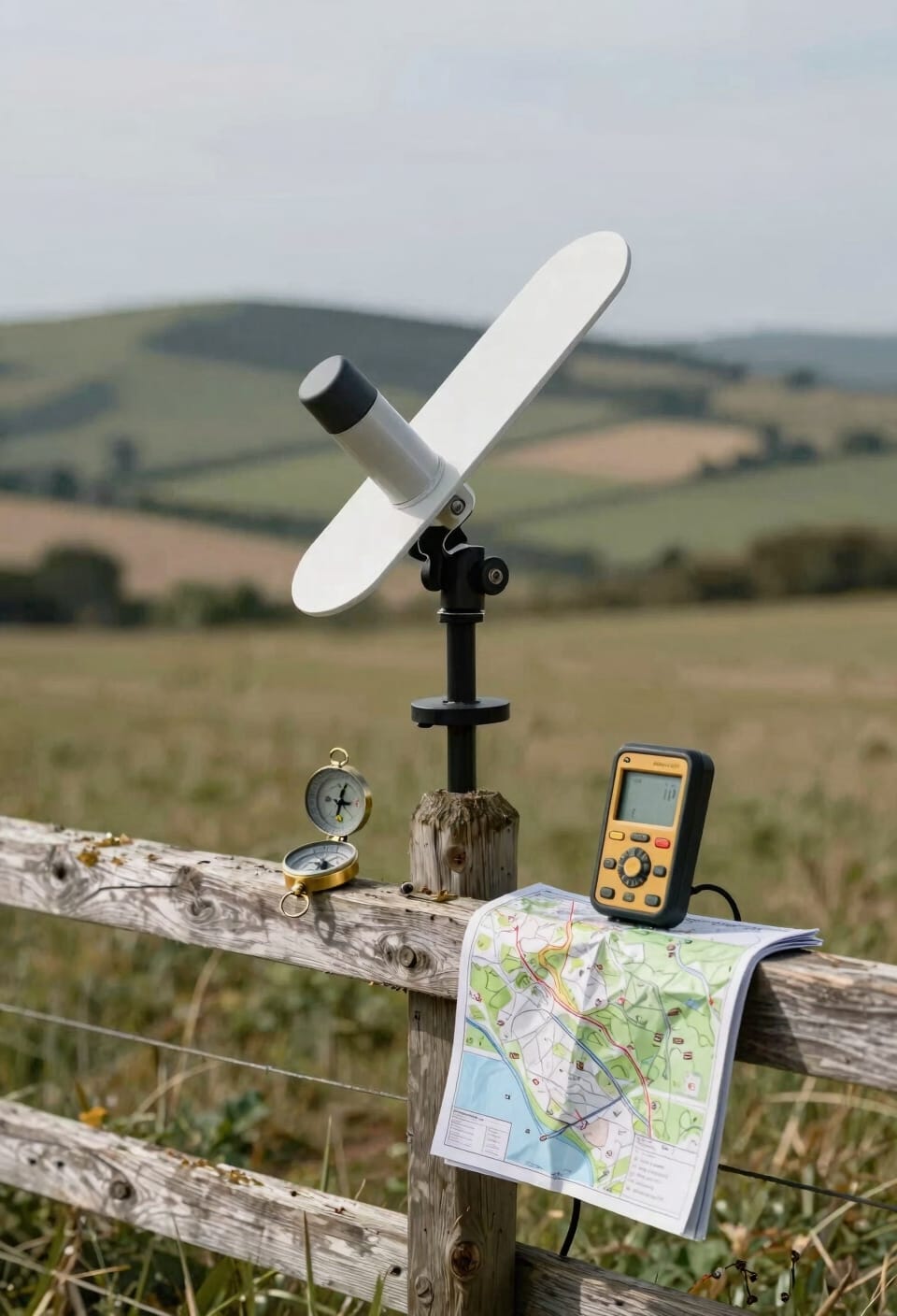
Once you’ve figured out where your signal’s strongest outside, you’ve got to pick an antenna that’ll actually grab it and hold on tight. Your directional selection depends on how far you are from the nearest tower and what terrain mapping reveals about your landscape. If you’re within a few miles with mostly open ground, a Yagi antenna works great. But if you’re dealing with dense trees, hills, or mountains between you and that tower? An LPDA antenna‘s your better bet—it’ll punch through those obstacles way better. For truly weak signals, directional antennas beat omnidirectional ones every time. Mount it high, aim it straight at your strongest signal spot, and you’ll notice the difference immediately.
Single vs. Multi-Carrier Boosters: Which Delivers More Gain?
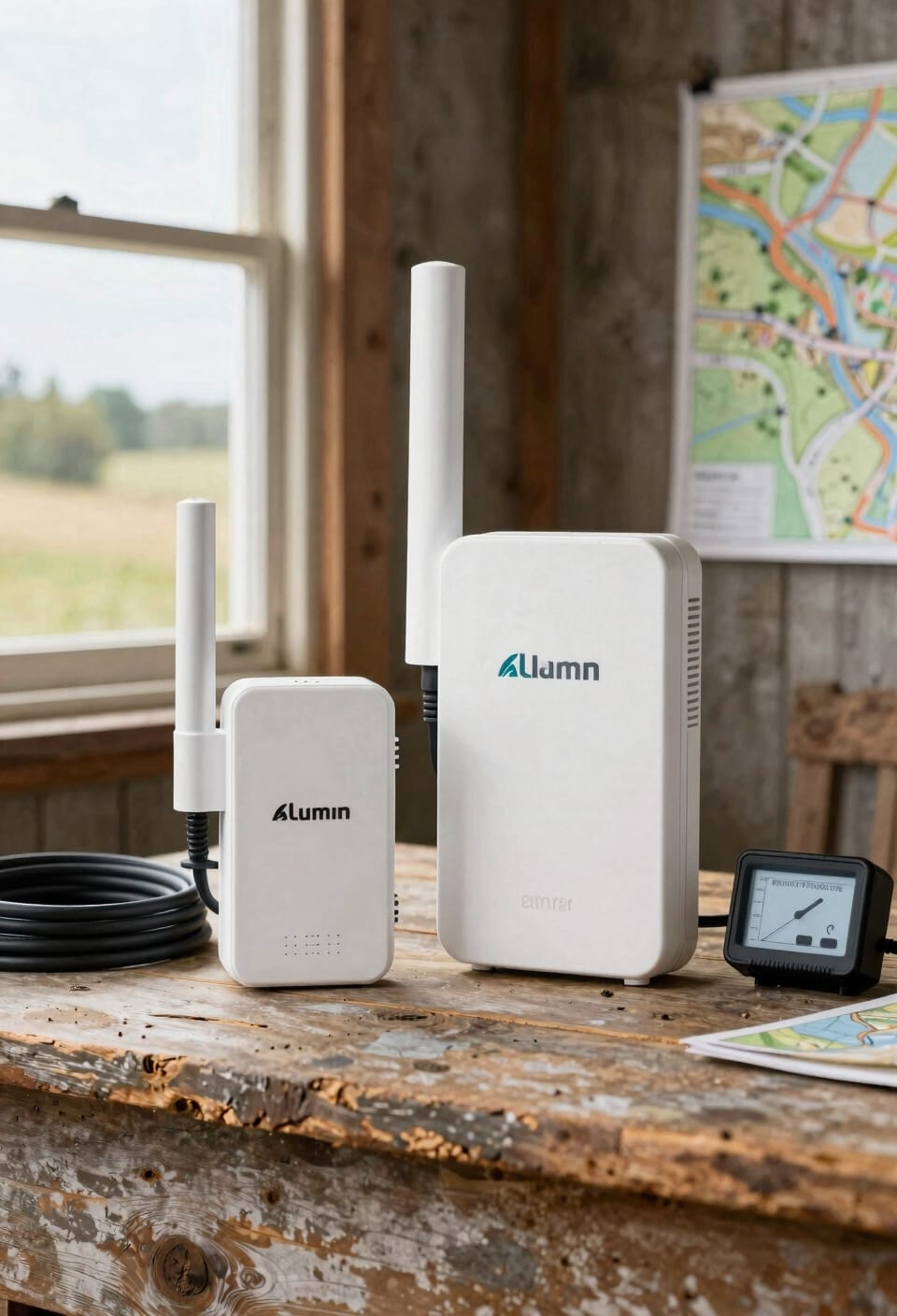
When you’re shopping for a cell signal booster, you’ll run into two main flavors: single-carrier and multi-carrier models, and I’ll be honest—this choice matters more than you’d think. A single carrier booster focuses all its amplification power on one network, like Verizon or AT&T, delivering maximum gain where you need it most. Multi-carrier models spread that same power across several networks, which sounds convenient until you realize it means shared bandwidth and lower performance per carrier. Think of it like dividing a pizza among more people—everyone gets fed, but nobody’s thrilled. For rural areas where every signal bar counts, single-carrier boosters typically win the max gain battle. If you’re locked into one provider anyway, going single-carrier is the smarter play.
Where to Mount Your Antennas and Booster for Best Results
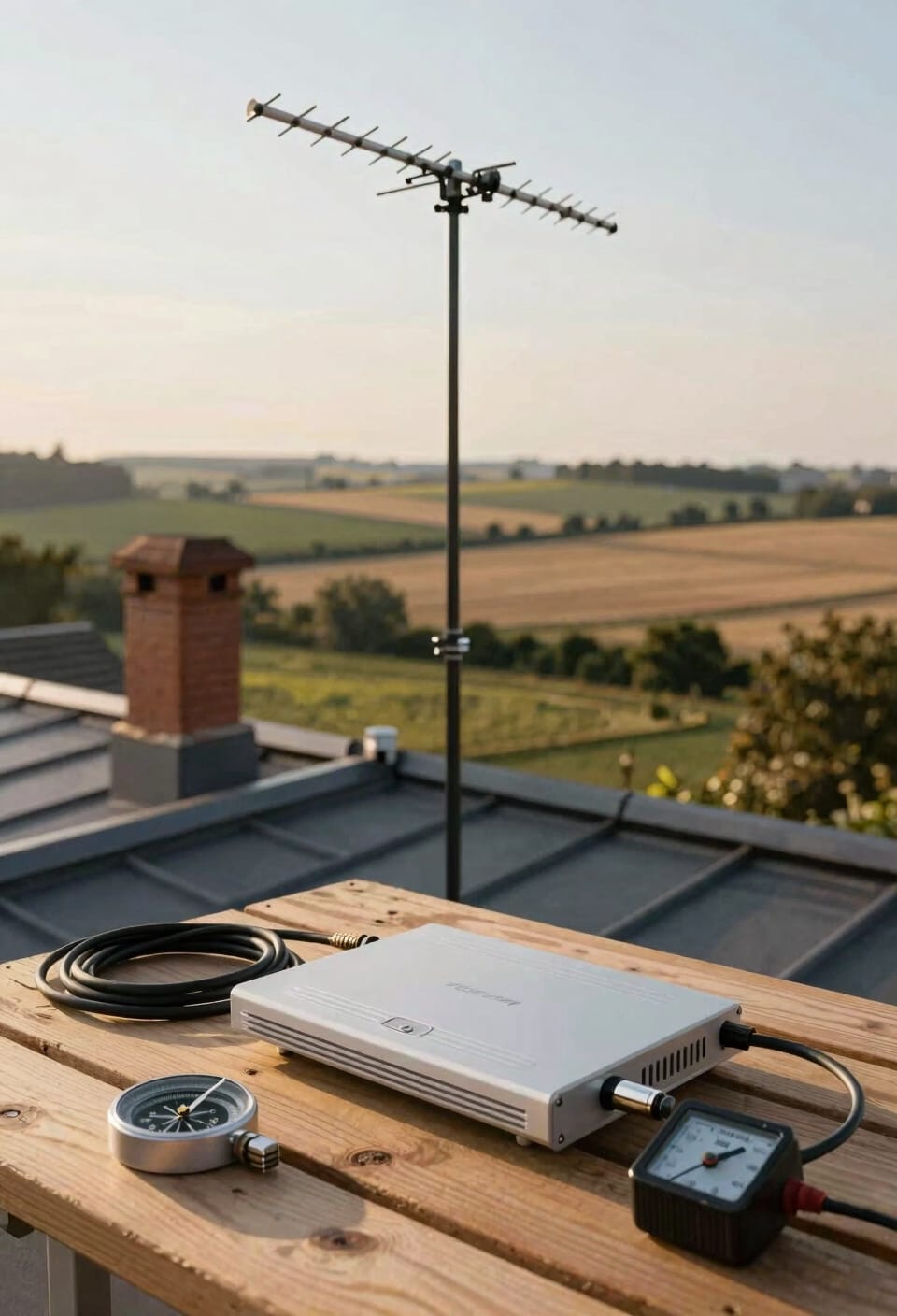
The difference between a cell signal booster that works great and one that barely works at all often comes down to where you stick your antennas—and I’ve seen plenty of people sabotage their own setups by mounting things in convenient spots instead of ideal ones. Roof mounting your outdoor antenna is non-negotiable. You want it as high as possible, pointed toward your nearest tower. That height difference? It’s the difference between catching a weak signal and missing it entirely. Your booster itself belongs in a central location—never basement placement. Basements bury your amplified signal under concrete and earth. Think middle of your home, on a main floor. Distance between outdoor and indoor antennas matters too. Separate them properly, and you’ll actually notice stronger calls and faster data.
Why Your Signal Didn’t Improve: Common Installation Mistakes
If your cell signal booster didn’t deliver the dramatic improvement you were hoping for, I’d bet money the installation itself is the culprit—not the equipment.
The most common mistake? Poor grounding. Your outdoor antenna needs solid electrical contact with your roof or mounting surface. Rust, paint, or loose connections kill performance faster than you’d think. Incorrect polarity on cable connections will also tank your results—make sure connectors align properly.
Another frequent slip-up is mounting your directional antenna too low or pointing it the wrong direction. You’re aiming at the tower, not the clouds. Indoor antenna placement matters too. Don’t hide it in a closet expecting magic. Mount it where you actually use your phone, and you’ll notice the difference immediately.
What to Try When Boosters Won’t Work: True Dead Zone Solutions
Sometimes you’ll do everything right—antenna mounted high, cables grounded solid, booster dialed in—and you’ll still get nothing. That’s a true dead zone, and boosters can’t manufacture signal from pure emptiness. Here’s the thing: when you’re genuinely outside amplifier range, you need different tools. Satellite internet bypasses cell towers entirely, beaming connectivity straight overhead—no signal required on the ground. It’s not perfect for gaming, but it works. Emergency hotspots from major carriers let you tether devices when cellular fails. Some folks pair these with mesh WiFi systems to distribute whatever connectivity they’ve got. You’re not defeated; you’re just pivoting to backup solutions that don’t rely on traditional towers.
Frequently Asked Questions
How Much Can a Cell Signal Booster Amplify Weak Outdoor Signals Indoors?
I can boost your weak outdoor signals up to 32 times stronger for reliable indoor coverage. The weBoost Home Complete delivers 72 dB maximum signal gain, transforming intermittent reception into consistent calls and faster data indoors.
What’s the Difference Between Directional and Omnidirectional Outdoor Antennas for Rural Areas?
I’ve found directional antennas like Yagis focus signal toward distant towers with narrow beamwidth, while omnidirectional spreads coverage broadly. You’ll pay more upfront for directional’s superior gain, but installation costs less when you’re targeting one tower precisely.
Are Cell Signal Boosters Compatible With All Carriers and Phone Devices?
Not all boosters offer equal carrier compatibility. I’d recommend single-carrier models for maximum gain, though multi-carrier options exist. Device interoperability’s broader—most phones work with any booster since they rebroadcast standard signals.
How High Should Outdoor Antennas Be Mounted for Maximum Signal Capture?
I’d recommend mounting your outdoor antenna as high as possible to achieve direct line of sight with the nearest tower. Height maximizes signal capture by overcoming terrain obstacles, so aim for rooftops or poles.
Can Boosters Work With Extremely Weak Signals, or Do They Need Minimum Strength?
I’ll help you boost a weak signal, but there’s a critical limit: you need at least some outdoor signal to work with. Boosters can’t create coverage in dead zones—they require that sliver of existing signal. Once you’ve got it, amplifiers overcome gain limits by strengthening what’s there.
Conclusion
boosting your rural signal isn’t magic, but it’s closer than you’d think. You’ve now got the tools to diagnose your problem, pick the right equipment, and install it correctly. Like tuning a guitar, sometimes small adjustments create huge differences. You’ll walk away with better service—or at least knowing exactly why your dead zone won’t budge. Either way, you’re no longer guessing.